


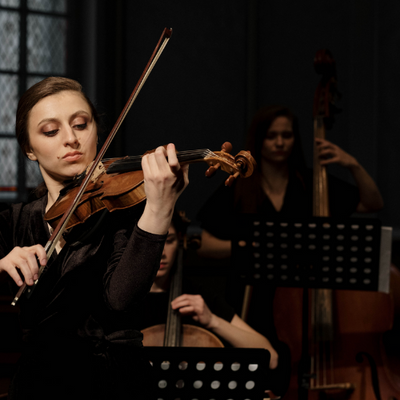
Double Bass: Orchestra's Unsung Hero
Walk into any orchestra concert and your eyes are likely drawn to the violins up front, the conductor at the centre, or perhaps the gleaming brass at the back. Tucked quietly behind the cellos, however, stands an instrument that rarely asks for attention — but without it, the entire orchestra would feel incomplete. The double bass may not always steal the spotlight, but it is the backbone that holds everything together.

The Quiet Backbone of the Orchestra
The double bass is the largest and lowest-sounding instrument in the string family. Its presence is often felt more than heard — listeners may not consciously notice it, yet instinctively sense when something is missing. From classical symphonies to film scores and jazz ensembles, the double bass provides depth, grounding, and stability. It is the musical equivalent of a strong foundation: invisible to many, but essential to all.
What Is the Double Bass, Really?
Standing taller than most of its players, the double bass produces the deepest tones among bowed string instruments. Tuned an octave lower than the cello, it bridges rhythm and harmony in a way no other string instrument quite can. Bassists may play with a bow (arco) or pluck the strings (pizzicato), switching seamlessly depending on the musical context. While it often mirrors the cellos or reinforces harmonic progressions, its role is far more nuanced than simply “playing the low notes.”

Holding the Orchestra Together
One of the double bass’s most important roles is anchoring time and harmony. Together with the cellos, bassists lock in the pulse of the music, ensuring that the orchestra moves as a single, cohesive body. A well-played bass section adds weight and clarity to the ensemble, making crescendos feel fuller and quiet passages more grounded.
When bass lines are precise and unified, the orchestra feels stable — even during complex or fast passages. When they are not, the entire ensemble can feel unsettled. This responsibility requires exceptional listening skills, rhythmic discipline, and a deep awareness of how one’s part interacts with every other section.
More Than Just the Low Notes
While the double bass is often associated with support, it is also capable of remarkable expressiveness. Modern composers and soloists have pushed the instrument far beyond its traditional role, showcasing its singing upper register, warm lyrical tone, and surprising agility. Solo double bass repertoire has grown significantly over the years, revealing an instrument that can be both powerful and tender.
For students and audiences alike, these moments are often eye-opening. Hearing a double bass take centre stage challenges long-held assumptions — and reminds us that every instrument has a full voice, waiting to be explored.

Life in the Back Row
Orchestral bassists typically sit — or stand — at the back of the ensemble, but their role demands constant engagement. They must watch the conductor closely, listen across the orchestra, and adapt instantly to subtle changes in tempo or articulation. Unlike melody instruments that often follow a single line, bassists are responsible for supporting everyone at once.
There is also a strong sense of camaraderie within bass sections. Because they share such a critical role, communication and teamwork are essential. Many bassists describe their experience as being part of the engine room of the orchestra — working hard, staying focused, and taking pride in supporting something larger than themselves.
The Double Bass in Singapore’s Music Scene
In Singapore, the double bass continues to play an important role across youth orchestras, school ensembles, and professional groups. Young musicians are increasingly discovering the instrument not just as an alternative, but as a meaningful first choice. With strong mentorship and growing exposure, the local bass community remains vibrant and supportive.
Music schools and orchestras here recognise that cultivating strong bass sections is key to developing well-balanced ensembles. Behind every confident orchestra performance is a group of bassists laying the groundwork — often quietly, always reliably.
Why the Orchestra Can’t Do Without It
Try imagining an orchestra without the double bass. The sound would feel lighter, less anchored, and strangely incomplete. The bass provides weight to harmonies, clarity to rhythm, and emotional depth to music. It shapes how we experience tension and release, softness and power.
Though it may not always command attention, the double bass is indispensable. It reminds us that music is not only about being heard — but about supporting, connecting, and giving shape to the whole.
Final Thoughts: Giving Credit Where It’s Due
The double bass may be the orchestra’s unsung hero, but its contribution is profound. For listeners, players, and educators alike, recognising its role deepens our appreciation of orchestral music. The next time you attend a concert, take a moment to listen for the bass. You may just discover that the heart of the orchestra has been there all along.